Altcraft Docs LogoAltcraft Docs Logo
User guide iconUser guide
Developer guide iconDeveloper guide
Admin guide iconAdmin guide
English
  • Русский
  • English
Login
    Getting StartedAdministrator documentationFunctional characteristics
      Technology descriptionarrow
    • Architecture OverviewComponent Description
        Deployment schemesarrow
      • Basic schemeFail-safe schemeTypical Placement in Infrastructure
    System requirements
      Admin Panelarrow
      • Account areaarrow
        • Accountsarrow
        • Account UsersAccount Virtual SendersAccount Database Indexes
        TariffsExternal data configurationLDAPTasksSchedule JobsGlobal Stop ListsWebversion Store PoliciesIn-App Storage Settings
        Settingsarrow
      • Databases
          Accessarrow
        • AdminsAPI tokens
        Notifiers
          MTAarrow
        • Default rulesRetry rulesLock rulesBounce patternsStrategiesKeysISPsPools
      Nodes
        Sendersarrow
      • EmailSMSEvent generatorIntegration with Altcraft Cloud SMTPIntegration with Sendsay
        Reportsarrow
      • Audit JournalData Usage
        Toolsarrow
      • ARF decoderURL decoderSMID decoderLicense
      Platform installationarrow
    • Automatic installationManual installationRunning the platform in a Docker container
      Platform configurationarrow
    • Configuration fileDomain settingsLDAP access configurationSending Email via SMTP relayPixel and push domain configurationCluster and Replication SetupSystem notifications configurationProcesses UNIX sockets configurationHTTPS ConfigurationMigrating from MongoDB Community to Percona ServerAdding sender IP addressesData Encryption in Percona Server for MongoDBDeduplication request settingsBackup with Percona Backup for MongoDBPostgreSQL database for Market dataProxy server settingsKeycloak Integration with AltcraftGetting HTTP service statusesConfiguring MongoDB log rotation
        Configuration of system constants and directoriesarrow
      • Filtering bot actionsDirectory of gender markers
      Custom Channelsarrow
    • Creating a Channel
        Pipelinesarrow
      • MessageScheduleListenerModerateStop
          Pipesarrow
        • HTTP RequestPackUnpackEventerSchedulerSelectorSQLStore SetStore GetLogResultErrorRMQ Publisher
      External Objects (Entities)Templating LanguageSending FilesPresets (Field Sets)DebuggingTechnical Limitations
      Platform maintenancearrow
    • Personnel requirementsPlatform maintenance processesPlatform updatingBackup and recoveryTransferring the platform to a new serverCreating, deleting, and populating tables for statistics in ClickHouseUsing the aktool utilityUsers and directories engaged by the platformPlatform service monitoringProcess and mailing monitoring via Prometheus
      Extraarrow
    • System page customizationSend Message IDClickHouse History Migration GuideInstructions for migrating history to ClickHouseUtility for importing push subscriptions to Firebase projectUtility for importing push subscriptions to Firebase projectENS: настройка интеграции
    Processing HTTP/HTTPS traffic
      Administrator APIarrow
      • Accounts admin apiarrow
        • Restricted accessarrow
        • Account Activation and DeactivationAccount Freeze and Unfreeze
        Get accounts listAdd a new accountDelete the account
        Account usersarrow
      • Update an Existing AccountAdd a new userDelete a userGet a list of usersSending a Welcome Email
        Nodesarrow
      • Synchronize node MTA configurationGet nodes listGet node MTA statusActivate node MTADeactivate node MTA
        Senders admin apiarrow
      • Create or update AKMTA senderGet AKMTA sender informationAssign account to senderGet senders listDelete senderRestore sender
          Sender queuearrow
        • Get sender queue informationHold sender queueRelease sender queueClear sender queue
        Virtual sendersarrow
      • Get virtual senders listGet virtual sender informationCreate virtual senderUpdate virtual senderClone virtual senderDelete virtual sender
    Documentation Archive
  • Admin Panel
  • Account area
  • In-App Storage Settings

In-App storage settings

Description​

In-App storage settings configure the S3 storage that stores the content of In-App messages. Storage is required for the In-App channel to work.

warning

Without a configured storage, the In-App channel does not work.

The S3 storage is connected in the configuration file using the OBJECTS3_* parameters. The bucket and credentials must be available to the platform. Detailed instructions on storage deployment (MinIO) are available here.

Creating storage​

To manage storage, in the main menu select Account Area — In-App storage settings:
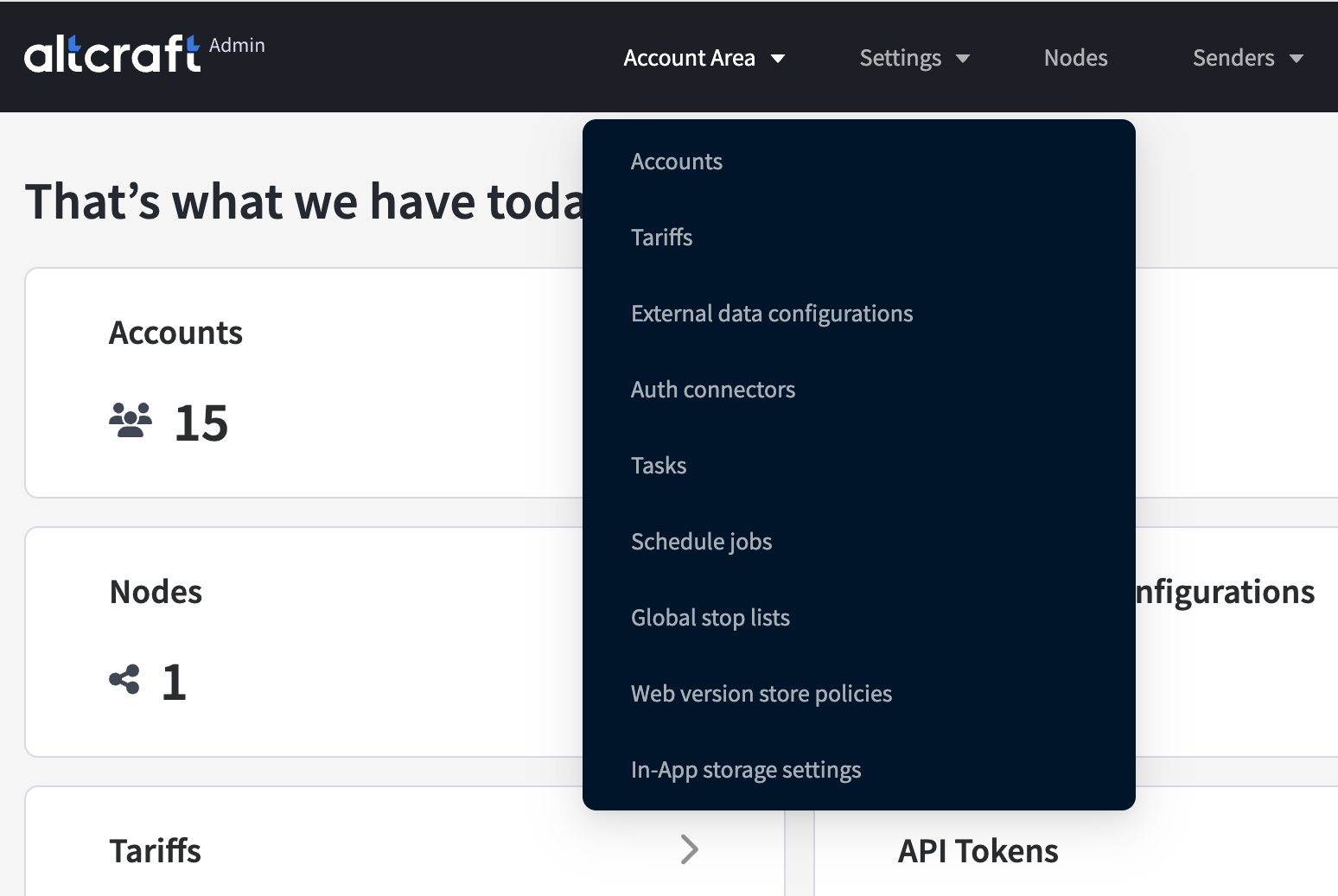
The list displays the created storage configurations. On the right side of the table are the edit and delete buttons. To create storage, click Create:
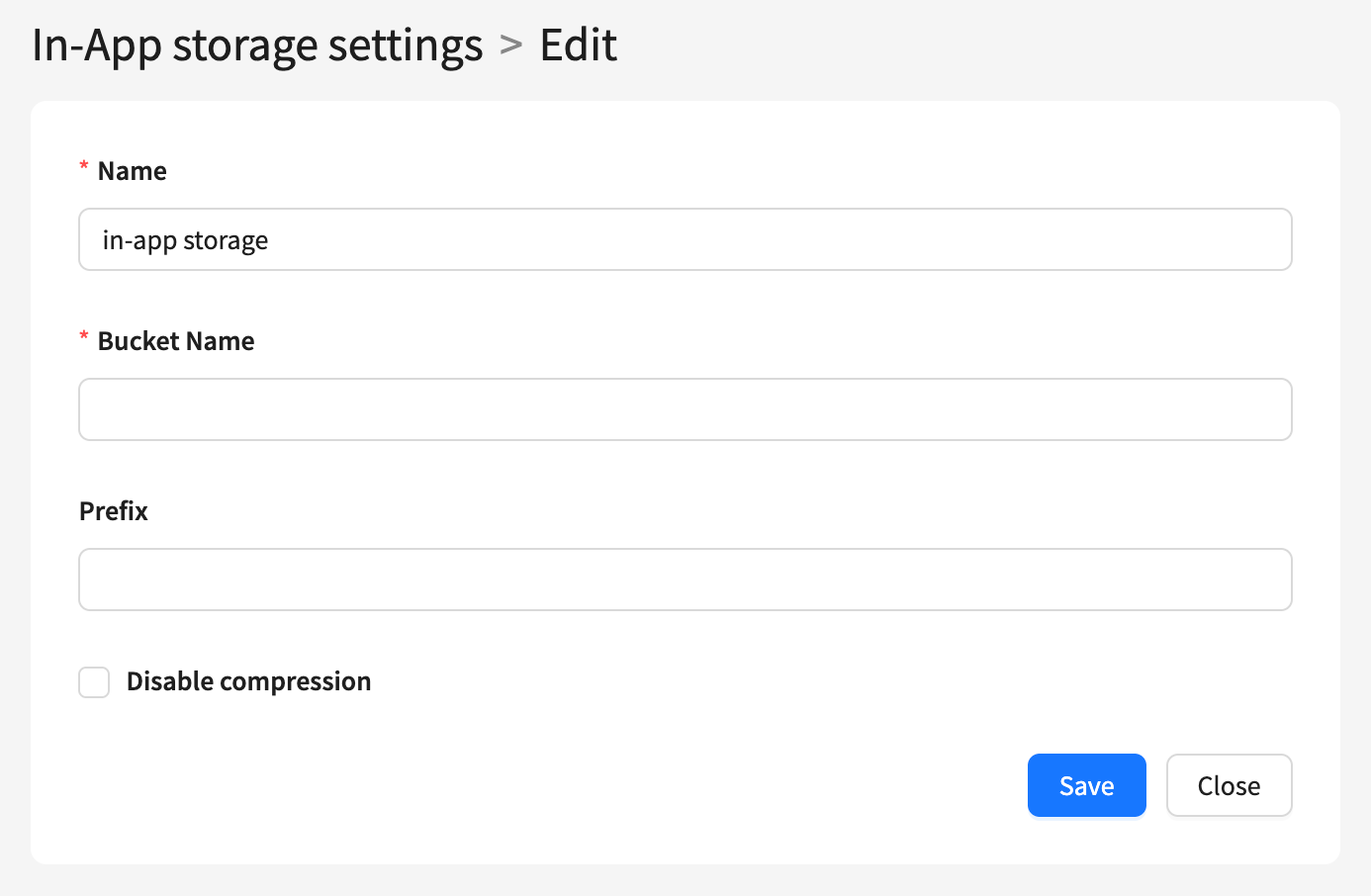
For each storage configuration, set the following parameters:

  • Name — the storage name.
  • Bucket Name — the name of the bucket (container) in the S3 storage where the objects will be stored.
  • Prefix (optional) — a string at the beginning of the object key name, used to organize data inside the bucket.
  • Disable compression — disables data compression during storage.

After saving, select the storage in the account settings.

info

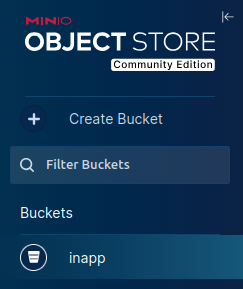
You can find Bucket Name in your storage UI:
Last updated on Sep 28, 2026
Previous
Webversion Store Policies
Next
Settings
  • Description
  • Creating storage
© 2015 - 2026 Altcraft, LLC. All rights reserved.