Profiles and databases
How to start
Create a database
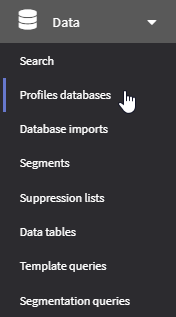 | Start from creating a database, where you will store digital profiles of your customers. Define the structure for your base, using standard data fields and custom data fields to implement Creating a database is your first step in using Altcraft Platform. |
Create subscriptions resource
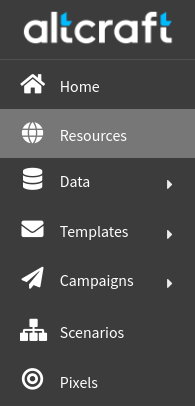 | Communications with customers in Altcraft is designed for interaction with several communication channels, including different contacts in one channel. Subscriptions of profiles for different types of mailing (advertising, inbound, service, partners) are grouped into Resources. A resource is a content publisher for which you can separately configure sender data, tracking, sending policies, and also communications channels used. Create at least one resource to start communication with your customers |
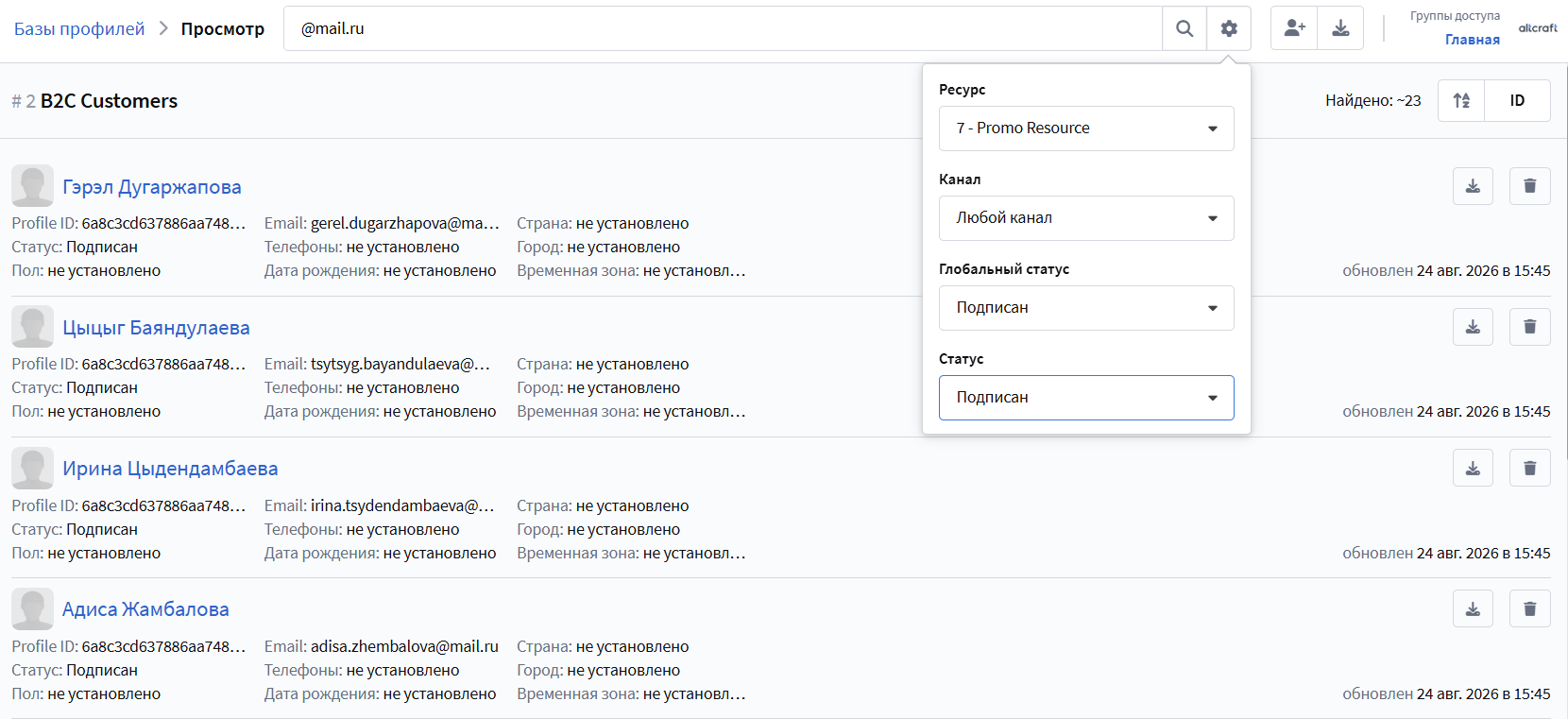
To find a specific customer profile in your databases, use the Search tool in the Data section. Enter the customer's data — the system will automatically determine the search mode.
You can set search parameters: Resource, Channel, Global status, and subscription Status.
Contents


Subscription resources
Subscription resources: a site, app or channel customers subscribe to, including setup and unsubscribe.
Managing databases
Profile databases: creating, fields, importing and exporting customers, segments as the base for mailings.
Subscriber profile
Digital profile: a record created for every mailing recipient, with the history of actions and role in scenarios.
Profiles import and data update
Importing customer profiles: loading a list, updating existing subscribers and handling errors.
Common Errors When Importing Profiles
Import errors: why a profile is rejected when a value does not match the field type, and how to fix the file.
Scheduled customer data import
Scheduled import: pulling data from an external database, updating profiles and subscribing new customers.
Managing Data Tables
Connecting external SQL databases: running queries and using the results in segmentation and dynamic content.
Automatic data collection
Automatic profile data collection: tracking, webhooks and pixels that keep customer information up to date.
Bulk customers profiles update
Bulk profile update: subscriptions to new resources, status changes, promo codes and deletion by conditions.
Double opt-in subscription
Double opt-in: a two-step subscription with email confirmation that cuts spam complaints and improves deliverability.
Suppression lists
Suppression lists: email addresses, domains and phones that never receive messages, and how to manage them.
Profile relations
Profile relations: direct and reverse links, manual and automatic linking via the API.
Profile history export
Profile history export: downloading profile activity from a database or segment to a file.
Profile export
Profile export: downloading a database or segment to CSV with the fields you choose.
Creating a static segment based on import results
A static segment built from import results: reaching a new audience without touching existing subscribers.
How to open a CSV file
How to open a CSV file in Excel without breaking the encoding: UTF-8 setup, delimiters and manual data parsing.
Matching
Profile matching: which fields are checked for a match on import, update and send.
Types of fields in the database
Database field types: standard fields, their API names and accepted values.


Global control groups
Global control groups: what they are, how to configure them and how they affect mailing results.
Subscription Manager
Subscription Manager: a page for managing profile data and subscriptions — setup, displayed fields and categories.